
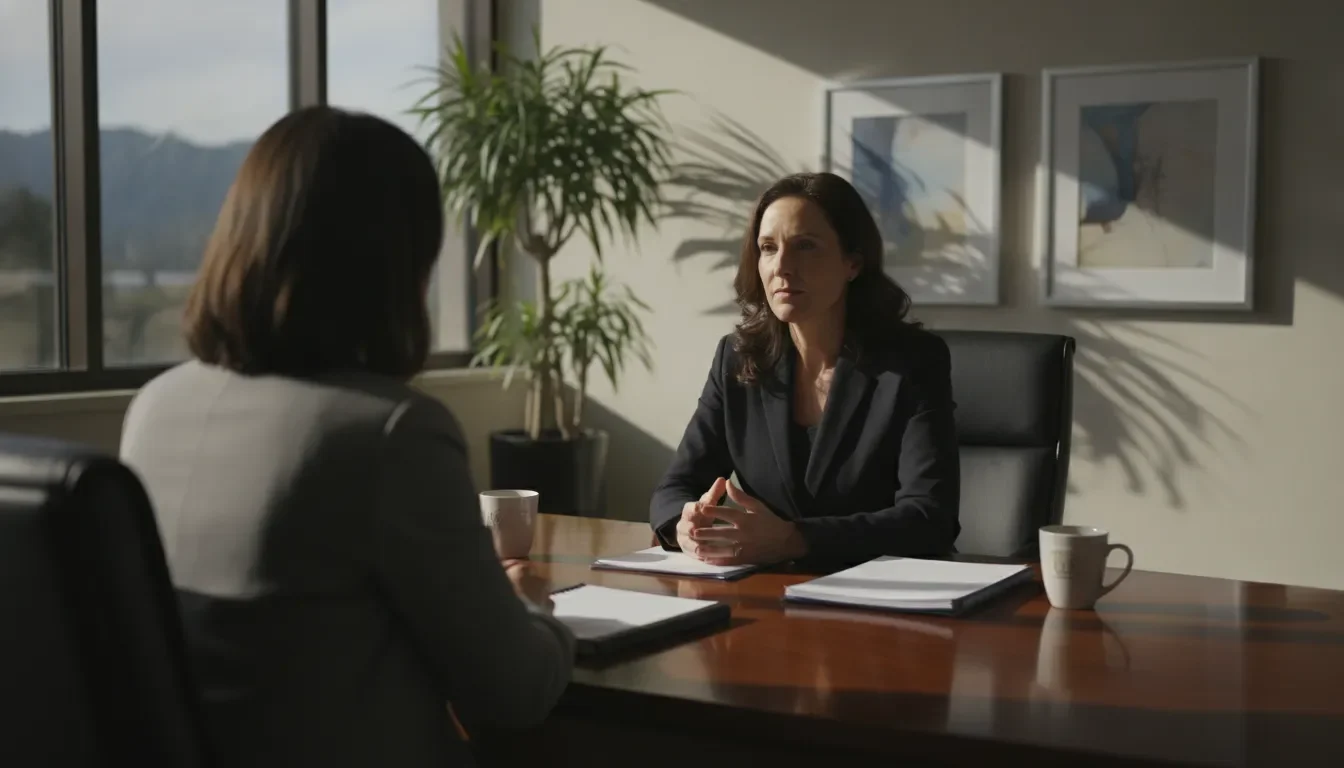
A charge, a court date, or a call from an investigator can make the next hour feel urgent. What happens after contacting a criminal defense lawyer in California is usually quieter than people expect. The office confirms it received your message, checks whether it can speak with you, and sets a time to hear the facts. Nothing about that first exchange means you have hired anyone, and it does not decide your case.
Jenica Leonard Legal is a solo practice in Santa Rosa. You meet with Jenica herself, not an intake team. The office serves Sonoma, Napa, Marin, and Mendocino Counties, offers a free consultation, and describes its criminal defense services on the services page. This guide covers only the stretch from your first message to a decision about whether to retain counsel. It is general information, not advice about your case. A lawyer who knows your dates and paperwork has to apply it to you.
What happens after contacting a criminal defense lawyer in California?
The first response is usually a scheduling step, not a legal opinion. On the contact page, the firm asks you to allow 48 hours for a reply and says each case gets the time it deserves. If a hearing is sooner than that, say so in the first message and include the courthouse and the date. A deadline is the fact that changes how fast the office should move.
You can also call 707-247-5051. A phone call and a written inquiry can both start the same path. Neither one creates an attorney-client relationship by itself. Until you and the lawyer agree on representation, you are a prospective client gathering information.
A normal first sequence looks like this:
You send a short note or leave a message with your name, county, charge if you know it, and the next court date.
The office replies, often to set a consultation, and may ask a few questions to see whether it can take the conversation.
You meet with Jenica, usually to walk through what happened and what is due next.
You leave with a clearer picture of the immediate dates, and with a choice about whether to hire private counsel.
If you already have counsel, or the court has appointed one, say that early. Lawyers have to avoid conflicts, and a second lawyer should not step into a case that already has an attorney without a clear handoff.
What the first reply does, and does not, mean
People often read a prompt reply as a promise that the firm will appear for them. It is not. A reply means someone received your inquiry and is willing to talk. It does not put a lawyer on your case, continue a hearing, or stop a detective from trying to reach you.
Until there is an agreement to represent you, plan to handle your own logistics. That includes getting to court if you have a date, following any release conditions, and not assuming someone else has called the clerk. If you are unsure whether a paper requires you to appear, bring that paper to the consultation rather than guessing.
It also helps to keep your own record of the outreach. Note the day you called or wrote, who you spoke with, and what date was proposed for a meeting. If a relative is helping, decide who will be the contact so the office is not getting two versions of the same story.
What a free consultation with Jenica usually covers
The free consultation is a working conversation, not a sales script and not a trial strategy. Jenica spent 15 years as a Sonoma County Deputy District Attorney before opening this practice. The point of the meeting is to hear your account, look at the papers you already have, and tell you what the next procedural step appears to be.
You can expect questions about the county, whether you are in custody or out, any protective order, and whether you have already spoken to police. You should also expect a plain description of what the firm can and cannot take on. Criminal defense is the current focus, including DUI, domestic violence, resisting arrest, and matters involving college students and younger adults. Juvenile cases are part of the practice too. Employment and civil rights work exists, but it is not what this conversation is built around.
A first meeting will not produce a promised result. No honest lawyer can tell you the charge will be dismissed before seeing the reports. If you want the longer view of case work after someone is actually retained, read how a criminal case defense lawyer helps once hired. That piece starts where this one stops.
Bring less paper than you think, but bring the right paper. A citation, a notice to appear, a bail receipt, and any release order are enough to start. A full guide to getting ready is in what to prepare before the consultation.
Conflict checks come before any real case talk
Before a lawyer can dig into facts, the office has to see whether it is free to talk. A conflict can come from a prior client, a co-defendant, or an alleged victim the firm already knows. In a small North Bay practice, that check is not a formality. The same courthouse community shows up on more than one side of a file.
You may be asked for names before anyone discusses defenses. Give the names of the other people involved, including a co-defendant or a complaining witness, if you know them. If the firm cannot consult with you, that is a protection for you as much as for the other person. Ask for the no as early as possible so you still have time to call someone else.
Do not treat a conflict as a comment on your case. It means the lawyer already owes a duty to someone else connected to the events. Pushing past that duty would put both of you at risk.
What to say, and what to hold, before anyone is retained
Share enough for the lawyer to spot deadlines and conflicts. A tight timeline is more useful than a long retelling. Include where it happened, whether you were arrested, whether you made a statement, and the next date on any paper you were given.
Hold the rest until you know the conversation is protected and the firm can represent you. Do not post about the incident, text witnesses, or send a play-by-play to a group chat and then forward that chat to the office. Those messages can end up in the case even if you later hire counsel. Do not contact an alleged victim to explain your side.
If an investigator calls before your consultation, you can decline to discuss the facts and say you are trying to speak with a lawyer. You do not have to sort the legal theory on the phone. Write down the caller's name, agency, and number, and bring that note to the meeting.
Families often want to call for the person who was arrested. That can help with scheduling, but the facts should come from the person who would be the client. A parent's or partner's version is secondhand, and the lawyer needs the account from the person who was there.
Confidentiality is real, and it is not the same as representation
California treats consultations carefully, but a first call is not a magic shield for every sentence you speak to every person in the room. Talk with the lawyer, not with a crowded lobby, and do not invite extra people into the meeting unless you and the lawyer have discussed it. A friend who sits in may later be treated as a witness.
Ask, in plain words, whether this conversation is confidential and whether the firm represents you yet. The two answers can differ. A consultation can be confidential even when the lawyer has not agreed to take the case. Representation starts when you and the lawyer agree that it starts, usually in a written fee agreement, not when you feel reassured.
If you are comparing lawyers, keep each consultation separate. Do not forward one lawyer's comments to the next. You are allowed to meet with more than one person before you hire. You are not required to share their work product with anyone else.
How this differs from being appointed a public defender
Contacting a private firm and asking the court for appointed counsel are different paths. At an arraignment, the judge explains the charge and the right to a lawyer. The California Courts self-help guide says that if you cannot afford a lawyer, the court appoints one, often a public defender, at no cost to you. That appointment is the court's decision, based on eligibility. It is not something a private office can promise.
A free consultation with a private firm does not replace that process. You can consult and still ask the court about appointed counsel. You can also hire privately if the fee agreement makes sense for you. Money questions belong in a direct conversation, because this site does not publish a fee schedule. For a separate look at cost factors, see how criminal defense attorney cost is usually explained.
The comparison below is about the first contact only. It is not a ranking of which lawyer is better.
Who decides you have a lawyer? After you contact this private office: You and the lawyer, after a consultation and an agreement. When you ask the court for appointed counsel: The judge, if you qualify.
What the first step usually is. After you contact this private office: A reply, often within the stated 48 hours, then a meeting. When you ask the court for appointed counsel: You tell the judge at arraignment that you want a lawyer.
Who you meet. After you contact this private office: Jenica, at this solo practice. When you ask the court for appointed counsel: The lawyer the court appoints, often a public defender.
What it costs to start. After you contact this private office: The consultation is free. Hiring is a separate agreement. When you ask the court for appointed counsel: No fee if the court finds you cannot afford counsel.
What it does not do. After you contact this private office: It does not appear for you or move a court date by itself. When you ask the court for appointed counsel: It does not start until the court appoints someone.
The California Courts arraignment page is the official overview of that first court date, including the right to appointed counsel. For how the rest of a case is structured after that date, the firm has a separate piece on the criminal case trial process in California.
Court dates do not wait for a convenient meeting
If you were cited and released, the date on the citation is yours until a judge changes it. Hiring a lawyer, or hoping to, does not erase it. Missing court can create a new problem that is harder to unwind than the original charge.
Tell the office the date in the first message. If the consultation would fall after you are supposed to be in court, say that plainly. You may still need to appear and tell the judge you are seeking counsel. On what that hearing is for, read what an arraignment in California involves.
Release conditions also stay in force. A stay-away order, a testing requirement, or a no-driving condition does not pause because you left a voicemail. If you do not understand a condition, follow the stricter reading until a lawyer or the court explains it.
People who were not arrested, but who think charges may be coming, are in a different spot. There may be no date yet. The consultation can still be useful, because the question is whether to wait, what not to say to investigators, and which papers to keep. Do not manufacture urgency, and do not ignore a letter that does arrive.
What you can decide at the end of the meeting
A good consultation ends with a choice, not a blur of legal words. You may decide to retain the firm, ask for time to think, speak with another lawyer, or ask the court about a public defender. Any of those can be a sound next step.
Before you leave, you should know three things. You should know whether the firm can represent you. You should know the next date that is already on calendar. And you should know what you personally must do in the next two days, even if you do not sign anything.
If you do hire, the work changes character. Investigation, discovery, motions, and negotiation belong to the representation, and they are covered in the article on what happens after you hire. This page will not repeat that sequence.
If you do not hire, you have still used the meeting well when you leave with your papers organized and a plan for the next hearing. Write down what you heard. Memory gets slippery once you are back in the parking lot.
If you want that first meeting with Jenica, reach the office through the contact page or call 707-247-5051. You can also read Jenica's background as a former prosecutor.
Frequently asked questions
Does contacting a lawyer mean I have hired one?
No. A message, a returned call, or a free consultation is not a retainer. Representation starts when you and the lawyer agree, usually in writing. Until then, court dates and release conditions remain yours to follow.
How fast will a Santa Rosa office call back?
Jenica Leonard Legal asks callers to allow 48 hours for a response to a written inquiry. If you have a hearing inside that window, put the date and courthouse in the first message, or call 707-247-5051 and say the date out loud.
Can I talk about the facts before a conflict check?
Share names, the county, and the next court date so the office can see whether it is free to speak with you. Save the detailed account for the consultation, after you know the firm can talk and you understand whether the conversation is confidential.
Will the lawyer go to court for me because I called?
Not from a call alone. Appearing, continuing a date, or speaking for you requires an agreement to represent you, and the court has to know who your lawyer is. If your date is soon, plan to attend unless a lawyer who already represents you tells you otherwise.
What if I cannot afford private counsel?
You can still ask the court at arraignment to appoint a lawyer if you cannot afford one. A free consultation does not decide that. The judge does, using the court's process. The California Courts explain that right on their arraignment guide.
A first conversation is a start, not a strategy
What happens after contacting a criminal defense lawyer in California should feel orderly. You get a response, a conflict check, and a meeting where someone who used to try these cases tells you what the next date appears to require. You then choose whether to hire.
Bring the citation or notice, the names of the other people involved, and a short timeline. Leave the speeches, the social media posts, and the promises for later. If you are ready to have that conversation, contact Jenica Leonard Legal in Santa Rosa. The firm will tell you whether it can meet, and you will leave knowing it does not represent you until you both agree that it does.
