Police Misconduct & Civil Rights Attorney Serving Sonoma, Marin & Napa Counties
When the People Sworn to Protect You Cause Harm — We Fight Back
Understanding Your Civil Rights
When someone you trust to protect you is the one who hurts you, it changes how you see the world. That betrayal — physical, emotional, sometimes fatal — deserves more than a case number. It deserves an advocate who understands both the law and the weight of what you've been through.
Jenica Leonard has spent her career on both sides of the courtroom, and she's seen firsthand how power can be misused when no one is watching closely enough. That's exactly why she fights the way she does: with precision, with urgency, and without apology. Law enforcement accountability isn't a talking point for her — it's personal, and it's the standard she holds every case to.
What Are Your Rights During and After a Police Encounter?
You have the right to remain silent, the right to refuse consent to a search, and the right to leave unless you are being detained or arrested. After an encounter — especially one that left you injured, traumatized, or grieving — you also have the right to seek answers and accountability. Evidence can disappear, memories can fade, and agencies can move quickly to protect their own. Acting early protects your case and your options.
Areas of civiL rights Representation (42 U.S.C. § 1983)
-
Section 1983 is a federal law that allows individuals to sue government officials — including police officers — when their constitutional rights have been violated while acting under "color of law." In plain terms: if an officer used their authority to hurt you, ignore your rights, or cause harm, this is often the legal pathway to hold them accountable and pursue justice.
-
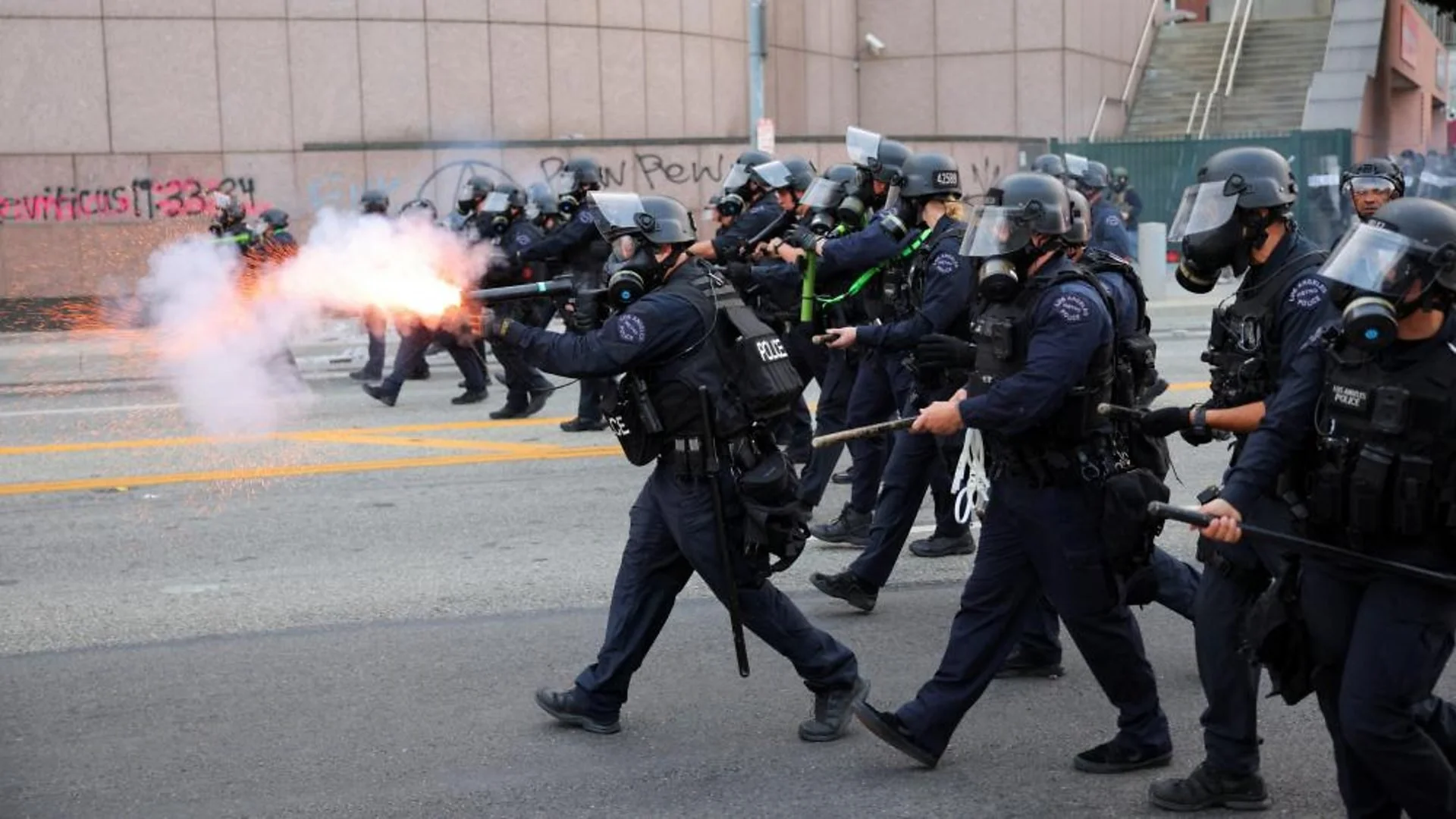
Were you assaulted by police while peacefully protesting? Jenica Leonard Legal has a host of experiencing litigating Civil Rights violations stemming from peaceful protests against the LAPD and LASO.
-
Civil rights violations can look different depending on the situation, but they often include excessive or unnecessary force, unlawful searches or seizures, false arrest, fabricated evidence, and failure to provide medical care while in custody. If something about your encounter with law enforcement felt wrong — even if you're not sure it was "illegal" — it's worth having a conversation. You don't have to already know the legal terms to have a valid case.
-
Whether your car or home was searched based on a trained K-9 sniffing the air, or you were bitten by a police K-9, Jenica Leonard Legal has the expertise and knowledge to help you challenge the K-9 and their handler’s expertise.
-
If your loved one was killed by police or died in police custody, Jenica Leonard Legal can assist you.
In 2024, Ms. Leonard was awarded Top 20 Settlements by TopVerdict.com for her work on Sutherland v. City of Stockton. In Sutherland v. City of Stockton, Stockton paid $6M to the family of the deceased and made crucial policy changes as a result of the settement.
-
Placeholder description
-
You have the right to remain silent, the right to refuse consent to a search, and the right to leave unless you are being detained or arrested. After an encounter — especially one that left you injured, traumatized, or grieving — you also have the right to seek answers and accountability. Evidence can disappear, memories can fade, and agencies can move quickly to protect their own. Acting early protects your case and your options.
Not sure if what happened qualifies? Reach out — we'll help you understand your options.

Who We Represent In Civil Rights Cases
Every client who walks through this door has a story that matters — and often, one that no one has taken the time to really listen to yet. Jenica Leonard Legal represents individuals and families across the North Bay who have been harmed by the very institutions meant to protect them
Individuals Injured During Arrest or Detainment
If you were hurt while in police custody — whether during an arrest, a traffic stop, or while being held in a facility — you don't have to accept that as "just what happens." Excessive force is never a routine part of law enforcement's job, and injuries sustained during an encounter with police are worth investigating, even if you were also charged with a crime.
Families Who've Lost a Loved One in Police Custody or During an Encounter
There is no version of grief that also has to include a legal fight — but for families who've lost someone to law enforcement action, that's often the reality. Jenica represents these families with the seriousness and care this kind of loss demands, working to get answers when agencies would rather the questions go away.
Victims of Excessive Force During Traffic Stops, Mental Health Crises, or Welfare Checks
Some of the most devastating encounters with police happen during moments that should have ended safely — a routine stop, a mental health emergency, a wellness check on someone who just needed help. When force is used against someone who posed no real threat, or who needed compassion instead of confrontation, that failure deserves scrutiny. Jenica is committed to representing people in these situations, especially those whose crises were met with force instead of understanding.
Why Choose Jenica Leonard Legal for Civil Rights Representation
A Former Prosecutor Who Knows How the System Works From the Inside
Before she represented victims of law enforcement misconduct, Jenica Leonard stood on the other side of the courtroom as a prosecutor. That experience isn't just a line on a resume — it's a strategic advantage for every client she represents. She knows how police reports get written, how internal investigations unfold, how officers are trained to testify, and where the gaps between policy and practice tend to show up. When you're up against a police department or a government agency, having an attorney who has seen their playbook from the inside changes what's possible in your case.
Deep, Specific Knowledge of North Bay Law Enforcement
General civil rights knowledge matters, but local knowledge wins cases. Jenica has built specific familiarity with the departments, agencies, and court systems across Sonoma, Marin, Napa, and Mendocino Counties — how local law enforcement operates, how North Bay courts and DA's offices tend to handle these cases, and where the pressure points are in this specific region. Clients aren't getting a generalist parachuting in; they're getting an advocate who already knows the terrain.
A Trauma-Informed Approach to a Traumatic Experience
Being harmed by law enforcement isn't just a legal event — it's often a deeply destabilizing one. Jenica approaches every case with an understanding that clients may be navigating fear, grief, distrust, or physical injury alongside the legal process itself. That means clear communication, patience, and a firm that treats you as a person first — never just a file number.
A Track Record of Criminal Defense Experience
Jenica was part of the legal team at V. James DeSimone Law that secured a $6 million settlement in Estate of Sutherland v. City of Stockton — a federal wrongful death case involving a man who died in police custody after officers failed to follow their own training on positional asphyxia.
She is ranked #11 on TopVerdict.com's list of the Top 20 Civil Rights Violation Settlements in California for 2024 — a testament to the level of advocacy Jenica brings to every case, whether it's a multi-million dollar wrongful death claim or an individual fighting to hold a single officer accountable.

What to Expect in a Civil rights case: The Process
Taking on a law enforcement agency can feel intimidating — especially when you're already dealing with the aftermath of what happened to you or your loved one. Here's what working with Jenica Leonard Legal actually looks like, step by step.
Step 1: Free, Confidential Case Evaluation
Every case starts with a conversation, not a commitment. During your free consultation, Jenica will listen to what happened, answer your initial questions, and give you honest feedback about whether you have a viable civil rights claim. Nothing you share is used against you, and there's no pressure to move forward. This step exists so you can get clarity — even if that clarity is simply understanding your options.
Step 2: Investigation & Evidence Gathering
If your case moves forward, the work begins immediately — because evidence in these cases doesn't wait. Jenica's team moves quickly to secure:
Body-worn camera and dash cam footage before it's lost, overwritten, or delayed through agency red tape
Witness statements, gathered while memories are still fresh
Public records requests for incident reports, use-of-force logs, internal investigations, and officer history
Medical records and documentation of injuries, when applicable
This phase is where cases are often won or lost. Law enforcement agencies are not always motivated to hand over evidence quickly — Jenica's experience as a former prosecutor means she knows exactly what to request, how to request it, and how to push back when agencies drag their feet.
Step 3: Filing a Claim & Litigation Timeline
Civil rights cases involving government entities often have strict, short deadlines — sometimes as little as six months to file an initial government claim, depending on the circumstances. Once your case is ready, Jenica will file the appropriate claim and, if necessary, pursue litigation in state or federal court. She'll walk you through what to expect at each stage — from filing, to discovery, to potential settlement negotiations or trial — so you're never left wondering what happens next or when.
Step 4: What Compensation May Cover
Every case is different, but compensation in civil rights cases can address:
Medical expenses and future care costs
Lost wages or loss of earning capacity
Pain and suffering
Emotional distress
Funeral and burial expenses, in wrongful death cases
Punitive damages, in cases involving egregious misconduct
Jenica will help you understand what's realistically available in your specific situation — without false promises, and without minimizing what you or your family have been through.
Frequently Asked Questions About Civil rights Cases

Not sure if what happened qualifies? Reach out — we'll help you understand your options.
-
A civil rights violation happens when a police officer oversteps the authority the law actually gives them — using more force than a situation called for, searching you or your property without legal justification, arresting you without probable cause, or treating you differently because of your race, gender, or another protected status. If something about your encounter with law enforcement felt wrong, unnecessary, or excessive, it's worth having that moment reviewed by someone who knows what the law actually allows officers to do — and what it doesn't.
-
In many cases, yes. California and federal law both give people injured by police misconduct a path to hold officers and departments accountable — most commonly through a federal civil rights claim under 42 U.S.C. § 1983. Whether you have a strong case depends on the specific facts: what force was used, what you were doing at the time, and whether that force was reasonable under the circumstances. There's no one-size-fits-all answer here, which is exactly why these cases deserve a real conversation, not a guess.
-
Excessive force is force that goes beyond what was reasonably necessary to control the situation — think tackling someone who was already compliant, using a taser on someone who posed no threat, or continuing physical force after a person has stopped resisting. Courts look at what a reasonable officer would have done, given what they knew in the moment. If your gut told you the response didn't match the situation, that instinct is worth taking seriously.
-
Possibly — and you deserve a straight answer, not a runaround. What matters most is what led to the injury: how much force was used, whether you were resisting, and whether that force was proportionate to what was actually happening. Injuries during an arrest aren't automatically unlawful, but they aren't automatically justified either. The only way to know where your situation falls is to walk through it with someone who handles these cases regularly.
-
These are two completely separate tracks, and a lot of people assume that if an officer wasn't criminally charged, they have no case — that's not true. A criminal case is brought by the government against the officer and requires proof beyond a reasonable doubt, which is a very high bar. A civil rights lawsuit is brought by you, seeks compensation rather than punishment, and uses a lower standard of proof. Officers are rarely criminally charged even in cases with strong civil claims, so don't let a lack of criminal charges stop you from asking about your options.
-
This is one of the most important questions on this page, because the clock can move faster than people expect. Civil rights claims generally follow a two-year statute of limitations in California, but if your claim involves a government entity — a police department, county, or city — you may also be required to file a formal government claim within as little as six months of the incident, well before that two-year window closes. Missing that early deadline can end a case before it starts, so if something happened to you, the safest move is to reach out sooner rather than later.
-
Yes, most civil rights cases — including ours — are handled on a contingency basis, meaning you don't pay attorney's fees unless we recover compensation for you. This work exists so that what happened to you in your encounter with police isn't compounded by a financial barrier to getting help. A consultation costs you nothing but a conversation.
-
In the immediate aftermath: get medical attention for any injuries, even ones that seem minor, and ask for documentation. Write down what happened while it's fresh — names, badge numbers, patrol car numbers, and any witnesses nearby. Photograph visible injuries and the scene if you're able to safely. Avoid posting about the incident on social media, and be cautious about giving detailed statements to investigators before speaking with an attorney. These early steps can make a meaningful difference in what's provable later.